
Pond & Land Drainage Pipes

Discover high-density polyethylene (HDPE) pipes, perfect for pond and land drainage. Efficient land drainage helps to remove excess water, prevent waterlogging, and improve soil quality in agricultural and landscaping applications. Robust and watertight pond pipes connect pumps and filters, ensuring essential water processes run smoothly.
Explore our complete range of products, each designed for optimal water flow, exceptional durability, and easy installation.
Make Maintenance Easy with Land Drainage Pipes and Pond Pipe
LBS Horticulture offers a selection of pipework for managing water and improving drainage and water flow. See each option in detail below.
Perforated and Unperforated Land Drainage Pipe
Our perforated land drain pipe is specially designed to collect surface water through small holes in the dwells of the coil. It's ideal for installing in expenses of land, like fields and lawns, to prevent flooding and waterlogging and improve overall soil quality. On the other hand, unperforated pipes do not have holes and are better suited for distributing collected surface water.
Both types of pipe are available in 25m or 100m pipe lengths, boast a flexible coil structure, and have a 90-degree bend radius over 1m. They are made according to BS4962:1989.
Pond Pipe
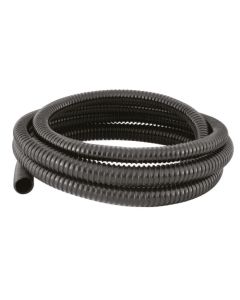
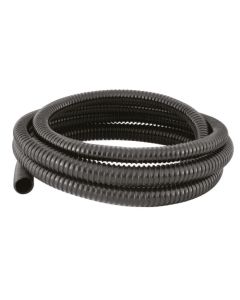
Our pond pump delivery hoses are essential for connecting pond equipment, such as pumps and filters, which are vital for maintaining a healthy pond environment. Each pipe is durable and provides uninterrupted flow, helping create a sturdy, leak-free pond with ease. Always measure the fittings on the devices and outlets you plan to connect to your hose before purchasing.

Frequently Asked Questions
A perforated land drainage pipe can be used to prevent waterlogging or drain ponds. To install, you'll need:
-
Planning
- Locate pooling water and determine natural flow.
- Identify the lowest-point discharge: ditch, soakaway, or main drain.
- Dig to intercept water (450mm-600mm deep). Ensure a minimum 1:100 fall.
- Gather pipe (60-100mm), geotextile fabric, washed gravel (10-20mm), and tools.
-
Digging
- Mark the path with a string line or spray, following the required gradient.
- Dig a 300mm-wide trench to the correct depth with a continuous slope.
- Ensure the trench connects to the outfall correctly.
-
Laying
- Line the trench with filter fabric, leaving excess to fold over.
- Add a 50mm-100mm layer of washed gravel onto the fabric.
- Lay the perforated pipe centrally on the gravel, joining sections as needed. Re-check the slope.
- Cover the pipe with gravel up to 150mm from the surface.
-
Finishing
- Fold the excess fabric over the gravel to fully encase the system.
- Fill the rest of the trench with topsoil and lightly compact it.
- Restore the surface. After heavy rain, check the outfall for free-flowing water.
Perforated land drainage pipe (or French drain pipe) is crucial for managing excess subsurface water in gardens, landscaping, and agriculture.
Typically made from HDPE with small perforations, it collects water and channels it away, preventing waterlogging, foundation damage, and muddy, boggy areas. A surrounding gravel layer prevents blockages from fine soil.
A land drainage pipe is commonly used when soil drains poorly (e.g., clay), the water table is high, water pools in low-lying areas, for pond drainage, or to protect structures and manage run-off from impermeable surfaces.