
Polytunnels & Structures

Whether expanding your allotment or cultivating commercial produce, rely on our polytunnels and outdoor structures to create your ideal growing environment. We offer convenient kits for polytunnels and structures like fruit cages, plus additional support braces and crop bars for added strength and customisation.
For related products, don't miss our selection of polytunnel covers, polythene films, handy accessories, and cleaning products for efficient upkeep.
Shop Excellent Deals on Polytunnels in the UK
Polytunnels provide an effective solution for controlling your environment, extending the growing season and offering reliable year-round protection for your crops. While similar to greenhouses, polytunnels feature a sturdy steel framework with a flexible polythene cover instead of rigid glass walls and roofs. This innovative design makes them adaptable to various gardening needs and more budget-friendly – perfect for hobbyists and professional gardeners alike.
Explore our range of polytunnel kits, available in widths from 10ft to 14ft, with various lengths to meet your specific requirements. We also offer kits for anchoring into concrete or soil to ensure quick and easy installation.
Boost Your Polytunnel's Functionality
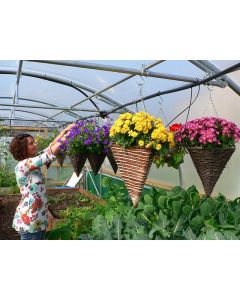
Take your polytunnel to the next level by enhancing it with support braces and crop bars. These additions reinforce structural integrity and are fantastic for supporting crops, securing canes, suspending wires, and hanging baskets. They're also perfect for suspending overhead irrigation, making hydration efficient and hassle-free.
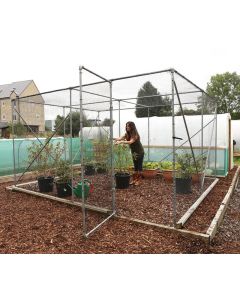
If you're seeking alternative outdoor structures, view our nifty fruit cages to keep pests at bay while your harvests thrive. For further crop protection, browse our wide range of netting and fabrics.



Frequently Asked Questions
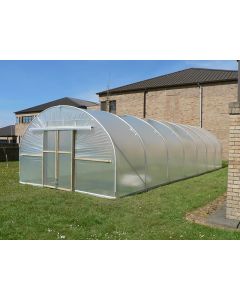
Polytunnels, also known as polyhouses or hoop houses, are large, curved structures used to grow plants. A polytunnel is a more affordable, accessible alternative to a traditional outdoor structure, such as a glass greenhouse, consisting of a framework, typically made from metal hoops, which are covered with a robust polythene film.
The purpose of a polytunnel is to create a controlled, warmer microclimate that extends the growing season and enables the cultivation of more tender or out-of-season crops. By trapping solar energy and providing shelter from harsh weather, such as wind, heavy rain, frost, and extreme cold, a polytunnel helps maintain consistently higher temperatures and humidity than the outside environment. This protective environment accelerates plant growth, increases yields, and protects against pests and diseases.
A polytunnel extends the growing season by creating a warmer, protected environment. This creates an ideal environment for nurturing out-of-season plants, while homegrown fruit and vegetables are also incredibly popular.
They are ideal for heat-loving plants such as:
- Tomatoes
- Cucumbers
- Peppers and Chillies
- Aubergines
Polytunnels also enable year-round harvesting of more robust vegetables, including:
- Leafy Greens, e.g. Spinach
- Root Vegetables, e.g. Carrots and Beetroot
- Cabbage and Kale
- Broad Beans and Peas
For domestic gardens, polytunnels often fall under Permitted Development Rights (PDRs), meaning you do not need to apply for full planning permission, provided they meet specific criteria, such as:
- Size: The polytunnel should not cover more than 50% of the garden area surrounding the original house.
- Height: The maximum height should not exceed 4 metres with a dual-pitched roof, or 3 metres in any other case (e.g., a shallow curved roof). If the polytunnel is within 2 metres of a boundary, the maximum height should be 2.5 metres.
- Location: The structure must be located to the rear of the house's principal elevation. It cannot be situated forward of the wall forming the principal elevation.
- Use: It must be for personal gardening, not for a commercial enterprise.
The rules become stricter when the polytunnel is used for commercial or agricultural purposes, which is often the case with larger structures.
- Commercial Horticulture: If the polytunnel is part of a commercial growing business, it is considered an 'operational requirement' for the agricultural use of the land. In this context, larger polytunnels often do require planning permission. Particular factors will be considered, such as:
The size and visual impact on the landscape.
The proximity to residential areas and the impact on neighbours' amenity. - Agricultural Holdings: On a recognised agricultural holding, specific structures for farming purposes may have separate permitted development rights. However, the use of polytunnels in large fields for intensive growing has been challenged, with many LPAs (Lasting Powers of Attorney) seeking to restrict or control large-scale polytunnel developments due to their visual impact on the rural landscape.